
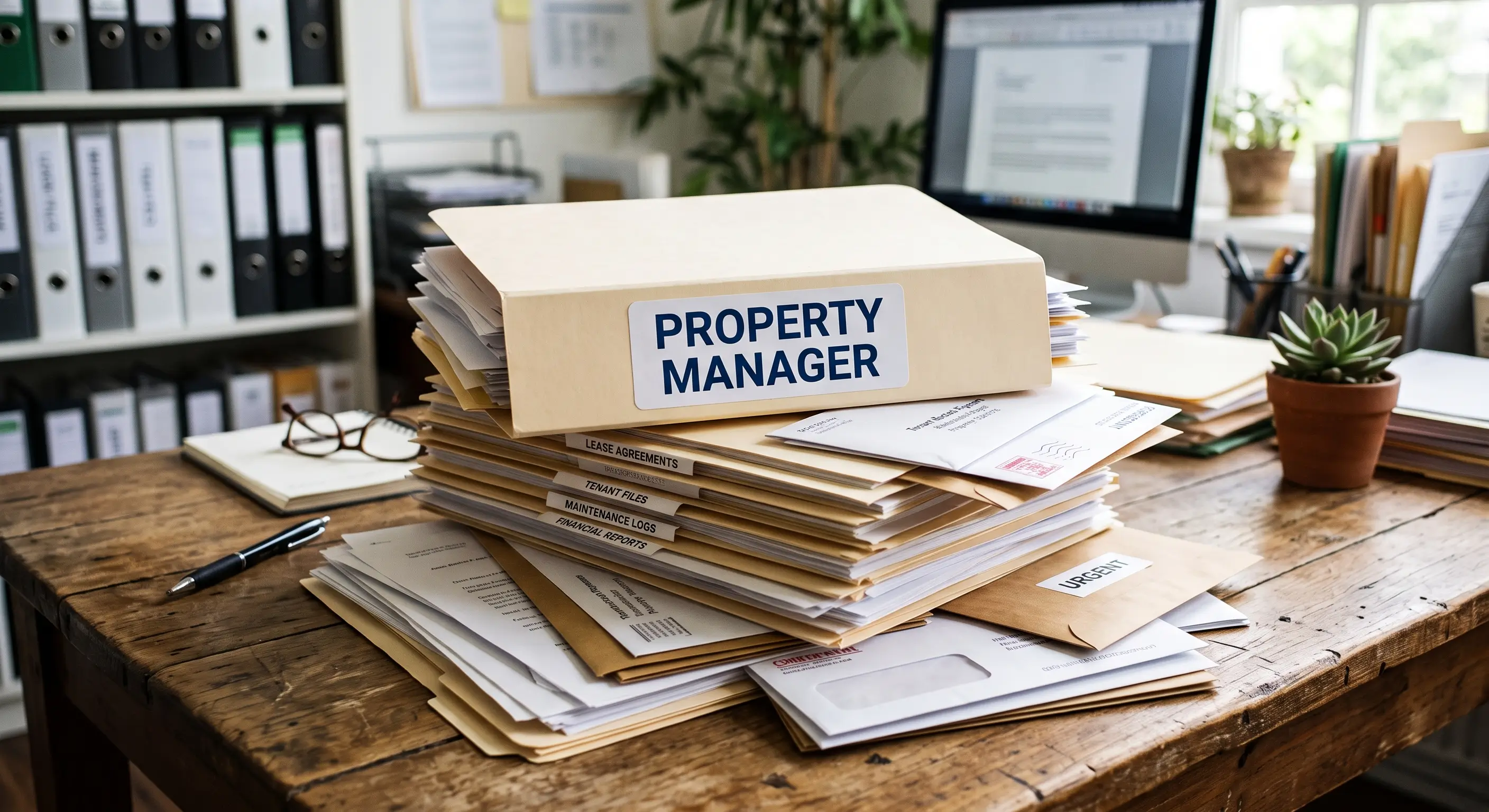
Most landlords assume three years of records covers them. Then a tax dispute surfaces old expenses, and the IRS asks for proof going back up to seven years. That gap catches many landlords off guard, and it's exactly why proper recordkeeping matters so much in the rental business.
A good property manager treats documentation like a safety net for the landlord-tenant relationship. Every signed lease, every repair receipt, every payment record tells a story that protects both property owners and tenants when questions come up later.
Here are the key documents every rental property should have on file.
Key Takeaways
- Lease agreements, tenant files, and inspection records protect both owners and tenants when disputes arise
- Financial records and payment histories support tax preparation and long-term financial management
- Maintenance and repair documentation backs up tax deductions and reduces liability
- Eviction and legal notice files can be the deciding factor if a dispute reaches court
Documents Property Managers Keep for Rental Property Owners
Lease Agreements and Renewal Records
Lease agreements are the foundation of every rental property file. A property manager keeps signed lease agreements on hand for the full lease terms and beyond, since these documents outline rent payments, late fees, and lease violations. Lease renewals should be filed alongside the originals so there's a clear record of how terms changed over time.
Tenant Screening and Application Files
Tenant files should include rental applications, tenant screening results, and any communication logs tied to the tenant relationship. These documents related to tenant applications matter most when tenant disputes arise, since they provide documentation of what was agreed to and when. A property manager who keeps organized tenant records is in a much better position to resolve disputes quickly.
Financial and Rent Payment Records
Financial records cover more ground than most owners expect. This includes rent payment records, payment receipts, bank statements, and property-related expense records. Rental income and every financial transaction should be tracked consistently, since these documents support both tax preparation and everyday financial management. Payment histories also help a property manager spot patterns, like a tenant who's consistently late, before it becomes a bigger issue.
Maintenance and Inspection Reports
Repair documentation and maintenance records show exactly what work was done, when, and for how much. Many property management companies use property management software for maintenance tracking, logging maintenance requests as they come in and closing them out with repair records once the work is finished. Move-in and move-out inspection reports add to this file, creating a clear record of the property's condition that matters when it's time to return or deduct from a security deposit.
Insurance, Tax, and Legal Compliance Records
Every rental property should have its purchase agreements, insurance policies, insurance premiums, and property tax records stored securely. These financial documents come up during tax season, during a sale, or during an insurance claim, and tracking maintenance costs here supports tax deductions at filing time.
Eviction and Legal Notice Files
When an eviction becomes necessary, the paperwork trail matters more than ever. Legal documents like notice to vacate letters, lease violation notices, and court filings need to be retained in full, since these important records are often the deciding factor if a case ends up in front of a judge.
Struggling to keep every property's paperwork organized across your Houston portfolio? Emerson Property Management builds recordkeeping into every management plan, so owners always have access to their files.
What Proper Documentation Does for Houston Rental Owners
Keeping important documents organized isn't just busywork. It's what separates a smoothly run rental business from one that scrambles every time a question comes up. Here's what proper documentation does for Houston rental owners:
- Settles lease violations, security deposit disputes, and repair disagreements fast with accurate records
- Lets a property manager pull up any document in seconds through digital records instead of searching physical copies
- Supports compliance with local regulations in a market like Houston where landlord tenant rules can shift
- Makes tax return filing smoother by keeping financial documents organized ahead of tax season
- Backs up deductions and audit responses, since the IRS generally recommends keeping tax-related records for three years, stretching to seven years in cases involving underreported income
- Gives owners peace of mind that nothing gets lost between filings when records are retained digitally
Ready to stop chasing down paperwork every tax season? Talk to Emerson Property Management about how they handle recordkeeping for Houston rental owners.
Got Questions? Here's What Houston Owners Ask Most
Q: How long should Houston property managers keep rental documents?
Most financial documents should be kept for at least three years, though tax-related records may need to be retained for up to seven years depending on the situation.
Q: Are digital records legally valid for lease agreements in Texas?
Yes. Digital copies of signed lease agreements are generally accepted, though many property managers also keep physical copies on file for extra security.
Q: What happens if a property manager can't produce records during a tenant dispute?
Without documentation like signed leases, payment records, or inspection reports, resolving disagreements becomes much harder and can leave the property owner exposed to liability.
The Real Payoff of Staying Organized
Every lease, receipt, and inspection report adds up to something bigger than paperwork. It's protection for the investment and peace of mind for the owner. Houston rental property comes with enough moving parts already, and the right documentation keeps them from turning into costly surprises.
Owners who partner with a property manager that treats recordkeeping as a priority spend less time digging through files and more time reviewing returns. When a dispute comes up, the paperwork is already there. When tax season rolls around, the numbers are already organized. That kind of consistency is what turns a rental property into a business that runs itself instead of one that runs the owner ragged.
Want a property manager who already has this covered? Reach out to Emerson Property Management and see how they keep every Houston owner's records organized and ready.
.jpeg)